

Three Creek Preserve
5872 John Day Highway, Brogan, OR | Lat/Lng: 44.2866, -117.7292
$13,600,000
32435 ac.
07/02/2026
ACTIVE
Description
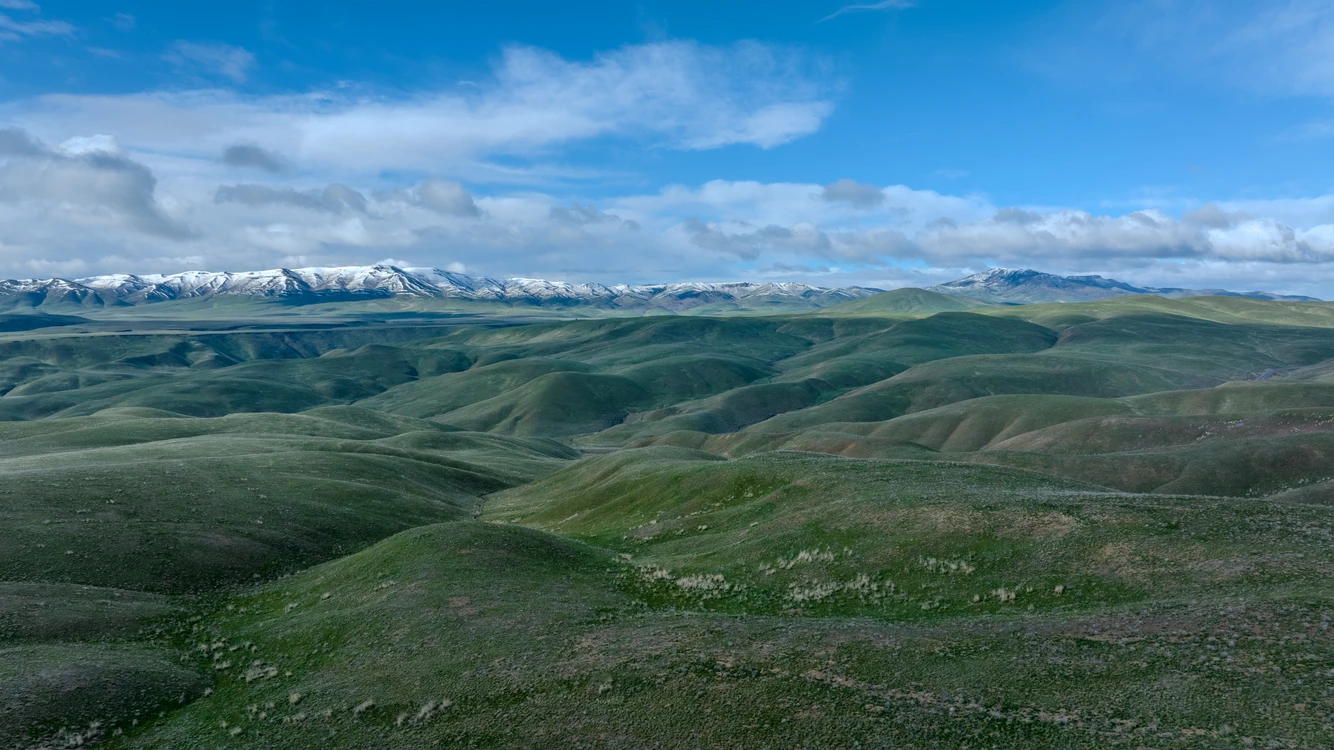
Three Creek Preserve is one of the largest privately owned, permanently conserved wildlife sanctuaries in the American West. Spanning 32,435 contiguous acres of high-desert mountains, canyons, and grasslands in Eastern Oregon, every acre of this property is protected in perpetuity under an Agricultural Working Lands Conservation Easement.
This is not a ranch that happens to have wildlife. It is a wildlife preserve that is actively managed as a working landscape, with regenerative cattle grazing and carefully stewarded trophy hunting serving as the primary tools that keep the land healthy, resilient, and wild.
For the conservation-minded buyer, Three Creek Preserve is a rare opportunity: to own a landscape-scale wilderness, safeguard critical habitat for generations, and participate in one of the most thoughtful models of working-lands conservation in the West.
At a Glance
Size: 32,435 deeded acres, 100% under conservation easement
Location: Malheur County, Eastern Oregon — the heart of “America’s Outback”
Elevation: 2,900 – 6,200 feet
Access: Year-round paved access via US Highway 26 (approximately 3 miles of the highway cross the property interior)
Zoning: Exclusive Range Use (ERU)
Stewardship History: Over 70 years of continuous single-family management
Conservation Partner: Oregon Agricultural Trust (OAT), in coordination with Oregon Department of Fish & Wildlife (ODFW)
World-Class Wildlife Habitat
Decades of careful stewardship have produced one of the finest private wildlife properties in the interior West. The mosaic of habitats — from Juniper Mountain’s north-facing timbered slopes, to the open grasslands of Cow Valley, to the sage-covered highlands and deep canyon breaks of the Kennel Range — supports resident populations that rival any landscape in Oregon.
Elk: An estimated 300–500 Rocky Mountain elk reside on the property year-round, with one of Oregon’s highest documented mature bull-to-cow ratios
Mule Deer: Resident and migratory populations across the full elevation gradient
Pronghorn Antelope: Established herds on the open grasslands and sage flats
Upland Birds: Chukar, California and valley quail, and Greater Sage-Grouse
Trophy Record: Boone & Crockett–class big game has historically been taken on the ranch
Trophy Hunting as a Stewardship Tool
On Three Creek Preserve, hunting is not a side enterprise — it is a management tool that funds and reinforces the long-term health of the herd and the land. A disciplined, low-pressure trophy program keeps age classes balanced, maintains genetic quality, and generates revenue that is reinvested in habitat work, water development, and fire resilience.
The property qualifies for Oregon’s Landowner Preference Program, providing reliable tag access that can be retained, shared with family and guests, or marketed through a guided program. This is private-land hunting at its finest: large-scale, lightly hunted, and set against a permanently protected backdrop — the way the American West’s greatest hunting properties have always worked best.
Regenerative Cattle Grazing as a Stewardship Tool
Conservation does not mean the end of ranching — at Three Creek Preserve, ranching is the conservation. Well-planned cattle grazing is the single most effective tool for maintaining grassland health, reducing catastrophic fuel loads, and supporting the native plant communities that sage-grouse, elk, and mule deer depend on.
16 pastures under a science-based, multi-pasture rest-rotation grazing system
Each pasture is rested at least once every three years to allow native forage to fully recover
Grazing serves dual purposes: productive cattle income and natural fuel-load reduction for wildfire resilience
Existing infrastructure supports efficient, low-overhead operations
The next owner can continue the current program, scale it, or lease the grazing — in every case, the land’s ecological values are protected forever.
The Landscape
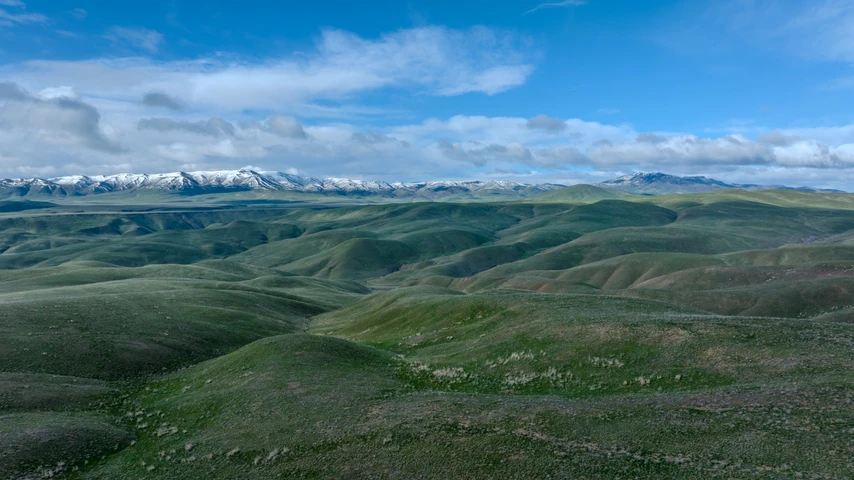
Three Creek Preserve is a landscape of scale and drama. The property climbs from the open floor of Cow Valley, across the rolling sage-and-bunchgrass highlands of the Kennel Range, and up the timbered north slopes of Juniper Mountain. Deep canyons, spring-fed draws, aspen pockets, and juniper savannas break the terrain into an extraordinary diversity of habitats.
Panoramic views reach across the high desert to the distant peaks of the Elkhorn Mountains. The property is bordered primarily by other large private ranches and limited BLM lands — offering exceptional privacy, dark night skies, and a true sense of wilderness.
Improvements & Infrastructure
Two existing residences
Three domestic wells
Six stock wells
Numerous natural springs
More than 40 stock ponds distributed across the pasture system
Well-maintained perimeter and interior fencing
Year-round paved highway access (US Highway 26)
Location & Access
The preserve is located along US Highway 26, five miles east of the ranching community of Ironside and 35 miles northwest of Vale, Oregon.
Boise, Idaho: 5 hours — full commercial airport and urban services
Ontario, Oregon: 15 miles east of Vale — retail, medical services, and a general-aviation airport
Climate: Semi-arid high desert with four distinct seasons, mild valley winters, and dramatic summer evenings over Juniper Mountain
Details
County: Malheur
Zipcode: 97903
Property Type One: Ranches
Property Type Two: Recreational Property
Property Type Three: Hunting Land
Brokerage: POLVI
Brokerage Link: www.polvirealestate.com

Jake Polvi
POLVI
(541) 410-3050
By clicking the button, you agree to our Terms of Use and Privacy Policy.


Nearby Listings
Baker County, OR
$1,750,000 - 1876 ac.
Baker County, OR
$1,050,000 - 161 ac.
Malheur County, OR

$2,000,000 - 3200 ac.
Baker County, OR

$1,265,000 - 48 ac.
Baker County, OR
$4,900,000 - 1676 ac.
Malheur County, OR

$2,400,000 - 559 ac.
Baker County, OR
$1,930,000 - 2200 ac.
Malheur County, OR
$5,900,000 - 444 ac.
Malheur County, OR
$1,404,000 - 102 ac.
Malheur County, OR

$972,000 - 81 ac.