

A TIMELESS PLACE
365 Caldwell Hill Loop, Lewisburg, WV | Lat/Lng: 37.7928, -80.4216
$648,000
12.1 ac.
08/05/2026
ACTIVE
Description
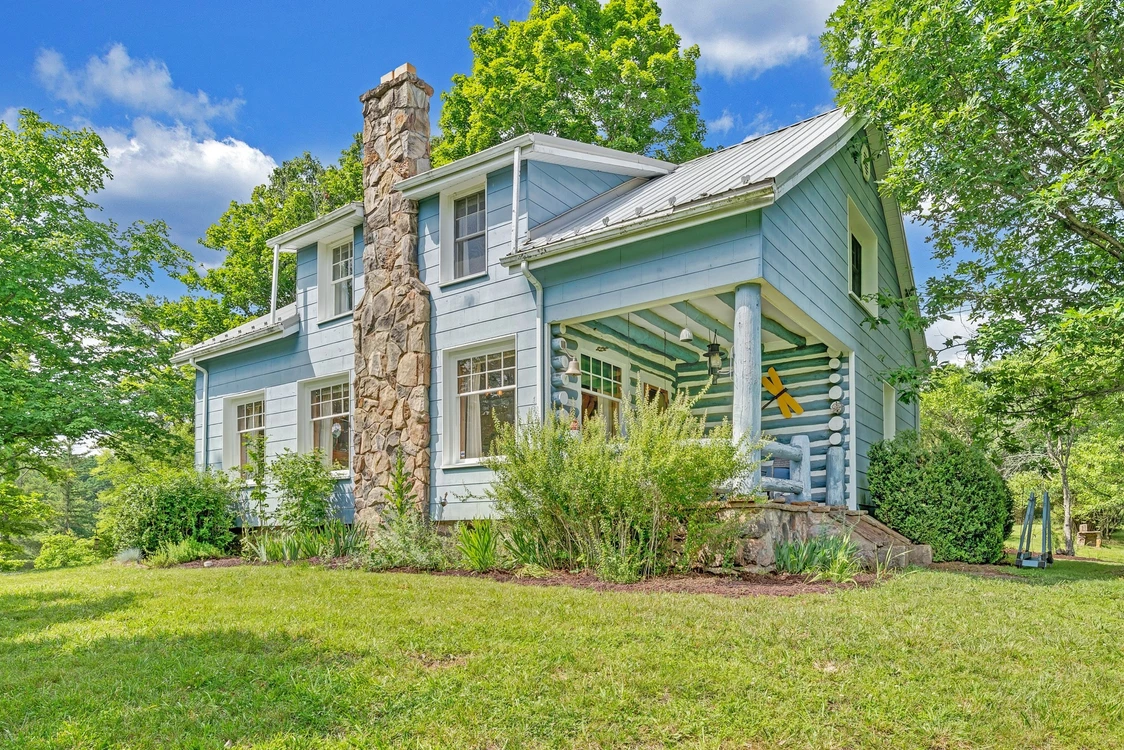
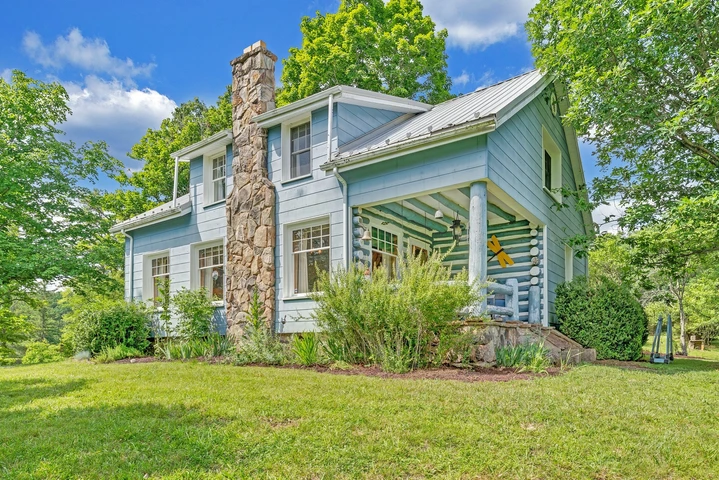
Welcome to “A Timeless Place”, a truly special property where history, nature, and careful stewardship come together in perfect harmony. The vintage log cabin, built in 1935, is encompassed within a remarkable 12-acre living museum of trees and woody plants, creating an extraordinary wildlife habitat unlike any other. Despite its peaceful, secluded setting, the property is located just five minutes from Historic Lewisburg, West Virginia.
A Timeless Place is the result of more than eighty years of dedicated care by a single family. Over three generations, the family thoughtfully cultivated an impressive botanical garden featuring a diverse collection of trees and shrubs from a wide variety of species. Their vision and stewardship have transformed the property into a unique natural sanctuary that offers beauty, tranquility, and a lasting connection to the land.
THE LOG CABIN
Log cabin circa 1945
FEATURES:
• Year built – circa 1938
• Exposed hand-hewn oak beams
• White pine solid paneling
• A field stone fireplace and chimney professionally laid
• Rough sawn solid oak mantle (bark still attached)
• Exposed attic rafters and interior roofing
• Hardwood floors throughout
• Basement floor is poured concrete with imbedded field stone in concrete
• Oversized windows create a sunny and cheerful feeling
Total square footage including basement: 3,456 sqft+- FIRST FLOOR: 1,250 sqft+- Living room, Dining area, Kitchen, Family room, Full Bath, Bedroom #1, Covered Porch SECOND FLOOR: 1,250 sqft+- #2 Bedroom, #3Bedroom/Office, #4 Bedroom, #5 Bedrooom/Office, Full Bathroom, Hallway BASEMENT: 956 spft+- Main room (mechanicals, washer-dryer), Wook room, Bath, Outside entrance.
THE VALUE OF TREES AT A TIMELESS PLACE
Mature trees are among the most valuable and irreplaceable features a property can possess. While landscaping can be installed in a matter of days, it can take decades—or even generations—for trees to reach their full size and beauty. Properties blessed with mature trees offer a combination of natural beauty, environmental benefits, privacy, wildlife habitat, and long-term value that simply cannot be replicated overnight. One of the most noticeable benefits of mature trees is their visual appeal. Towering oaks, maples, hickories, beeches, tulip poplars, and other established species create a sense of permanence and character that immediately distinguishes a property. Their broad canopies frame homes, line driveways, and provide a picturesque setting throughout the changing seasons. In spring, they bring fresh foliage and blossoms; in summer, cooling shade; in autumn, spectacular color; and in winter, striking architectural beauty.
Shade is another significant advantage. Mature trees can lower summer temperatures around homes and outdoor living areas, reducing energy costs and making the property more comfortable during warmer months. A well-placed shade tree can cool a home naturally while creating inviting spaces for relaxation, entertaining, and recreation. Privacy is often enhanced by mature trees as well. Established tree lines and wooded areas create natural buffers from neighboring properties and roadways, offering a peaceful sense of seclusion. Unlike fences, trees provide privacy while maintaining a natural and attractive landscape. For nature enthusiasts, mature trees create exceptional wildlife habitat. Their branches, cavities, bark, and foliage support countless species of birds, squirrels, deer, pollinators, and beneficial insects. Many mature hardwoods produce valuable food sources such as acorns, hickory nuts, walnuts, beechnuts, and soft mast that sustain wildlife throughout the year. Properties with mature trees often enjoy greater biodiversity and more frequent wildlife sightings.
The environmental benefits are equally impressive. Mature trees help improve air quality, capture carbon dioxide, reduce soil erosion, filter stormwater runoff, and improve overall ecosystem health. Their extensive root systems stabilize soil and help regulate water movement across the landscape, contributing to healthier streams and watersheds. Perhaps most importantly, mature trees represent something that cannot be purchased or rushed: time. A century-old oak or a towering tulip poplar stands as a living testament to decades of growth and stewardship. When purchasing a property with mature trees, buyers inherit a landscape that has been developing for generations.
In today’s world, where many developments feature newly planted landscapes, properties with established trees stand apart. They offer beauty, shade, privacy, wildlife habitat, environmental benefits, and a sense of place that only time can create. For many buyers, mature trees are not simply a landscape feature—they are one of the property’s greatest assets and a legacy that will continue to grow for future generations.
NINETY-THREE TREES AND PLANT SPECIES LIVING AT A TIMELESS PLACE
• Black-eyed Susan • Hens-and-Chicks • Blue Fescue • Red Fescue • Winter Creeper • Caucasian Stonecrop • Lamb’s Ear • Common Speedwell • Waxed Begonia • Wild Basil • Parmeliaceae (fungi) • Northern Bayberry • Common Periwinkle • Black Medick • White Clover • Dallis Grass • Japanese Quince • Burning Bush • Catmint • American highbush cranberry • Common Mullein • Scarlet Beebalm • Spirea • European Plum • Concord Grapes • Kentucky Coffee tree • Tulip Tree • Black Haw • Russian Sage • Chinese Privet • Bearded Iris • Daffodils (several varieties) • Peony • Queen Anne’s Lace • Witch Hazel • Serviceberry • Ascidiacea (fungi) • Poison Ivy • Fuzzy Deutzia • Paper Mulberry • Common Lilac • Oakleaf Hydrangea • Border Forsythia • American Holly • Goldenrod • Japanese Raspberry • Field Thistle • Autumn Olive • Self-heal • Swamp Rose • Carolina Horsenettle • Japanese Barberry • Cogan grass • Mountain Mint • Little Evening-Primrose • Sawtooth Blackberry • Harvest Lice • Longleaf Summer Bluet • Southern Dewberry • Chinese Bush clover • Oxeye Daisy • Chinese Silver grass • Poverty Rush • Norway Spruce • Eastern Redbud • Sweet Cherry • Black Cherry • Weeping Willow • Flowering Dogwood • Black Walnut • Yellow Buckeye • Ginkgo • American Elm • Sugar Maple • Norway Maple • Shagbark Hickory • Black Gum • Sweetgum • Bigtooth Aspen • American Beech • Bear Oak • Chestnut Oak • Scarlet Oak • White Oak • Black Oak • Pignut Hickory • Black Locust • Wingstem • Sassafras • Deertongue • Black Gum • Scots Pine • Virginia Pine
BUTTERFLIES
The property is an exceptional habitat for all butterflies, especially the Monarch. The monarch is highly dependent on the milkweed plant and will always return to areas rich in milkweed to lay their eggs upon the plant. The milkweed they feed on as caterpillars is actually a poisonous toxin and is stored in their bodies. This is what makes the monarch butterfly taste so terrible to predators.
Of course, other butterflies visit the property, including the eastern tiger and spicebush swallowtails, silver-spotted skipper, and a variety of sulphurs and whites.
One other interesting insect to visit the property is the Black Saddlebag Dragonfly, a regular guest of the creeks and wetlands with all the frogs, salamanders, crawdads and turtles.
CONSERVATION BRUSH PILES
One of several brush piles
DID YOU KNOW: Piling brush instead of burning it can provide several important benefits for both wildlife and the environment.
Improved Air Quality In times past, it was common to burn brush piles. Today, more is known about how ecosystems function and how brush piles help sustain local ecosystems. In short, brush piles provide valuable wildlife habitat that provides shelter, food, and breeding opportunities for many species
Fire and smoke harm the environment
Burning brush releases smoke, particulate matter, and carbon dioxide into the atmosphere. Piling and allowing natural decomposition reduces air pollution and minimizes impacts on neighbors and local communities.
Shelter and Sanctuary Brush piles are stacks of woody debris, branches, and leaf litter valued as sanctuaries for wildlife. Brush piles create safe places for animals to hide from predators, extreme weather, and human disturbance. Small mammals like chipmunks, voles, and rabbits use them for nesting and refuge, while reptiles and amphibians find cover under logs and debris. Birds use them for roosting, nesting, and perching, especially near feeders or water sources.
Food Sources Decaying wood attracts insects, fungi, and other invertebrates, which in turn feed birds, small mammals, and reptiles. Many insects overwinter in brush piles, providing a crucial food supply for birds and other insectivores in spring and summer.
Nesting and Breeding Sites Some species use brush piles for denning or nesting. Amphibians and reptiles may breed or rest there, and birds may nest on or near piles if they are close to food and cover. As brush breaks down, it provides habitat for native bees, beetles, butterflies, and other beneficial insects. These insects play a vital role in pollination and natural pest control.
Microhabitat Creation The layered structure of brush piles — with large logs at the base and smaller twigs on top — creates air pockets and crevices that support diverse life forms, from mosses and lichens to insects and small vertebrates.
Soil Health When brush is left to decompose naturally, it returns organic matter and nutrients to the soil. Decomposing wood improves soil structure, increases moisture retention, and supports beneficial fungi and microorganisms. Burning removes much of this valuable organic material from the ecosystem.
Erosion Control Brush piles placed on slopes or along drainage areas can help slow water runoff, trap sediment, and reduce erosion. Over time, they help build soil and stabilize vulnerable areas.
A Timeless Place can be considered an arboretum, which is a botanical collection composed exclusively of trees and shrubs of a variety of species. It is a living museum of trees a
Details
County: Greenbrier
Zipcode: 24901
Property Type One: Farms
Property Type Two: Recreational Property
Property Type Three: Residential Property
Brokerage: FoxFire Realty
Brokerage Link: www.foxfirenation.com
Apn: 09 2400770000

Richard Grist
FoxFire Realty
(304) 645-7674
By clicking the button, you agree to our Terms of Use and Privacy Policy.


Nearby Listings
Nicholas County, WV

$219,000 - 73 ac.
Monroe County, WV
$350,000 - 82 ac.
Giles County, VA

$425,000 - 60 ac.
Fayette County, WV
$975,000 - 153 ac.
Greenbrier County, WV

$425,000 - 1 ac.
Greenbrier County, WV

$359,900 - 0 ac.
Raleigh County, WV
$2,400,000 - 408 ac.
Monroe County, WV
$139,995 - 14 ac.
Monroe County, WV
$1,625,000 - 93 ac.
Greenbrier County, WV

$179,000 - 0 ac.