

Twin Roads
Swamp Road, Lugoff, SC | Lat/Lng: 34.1661, -80.6607
$6,000,000
906 ac.
04/07/2026
ACTIVE
Description
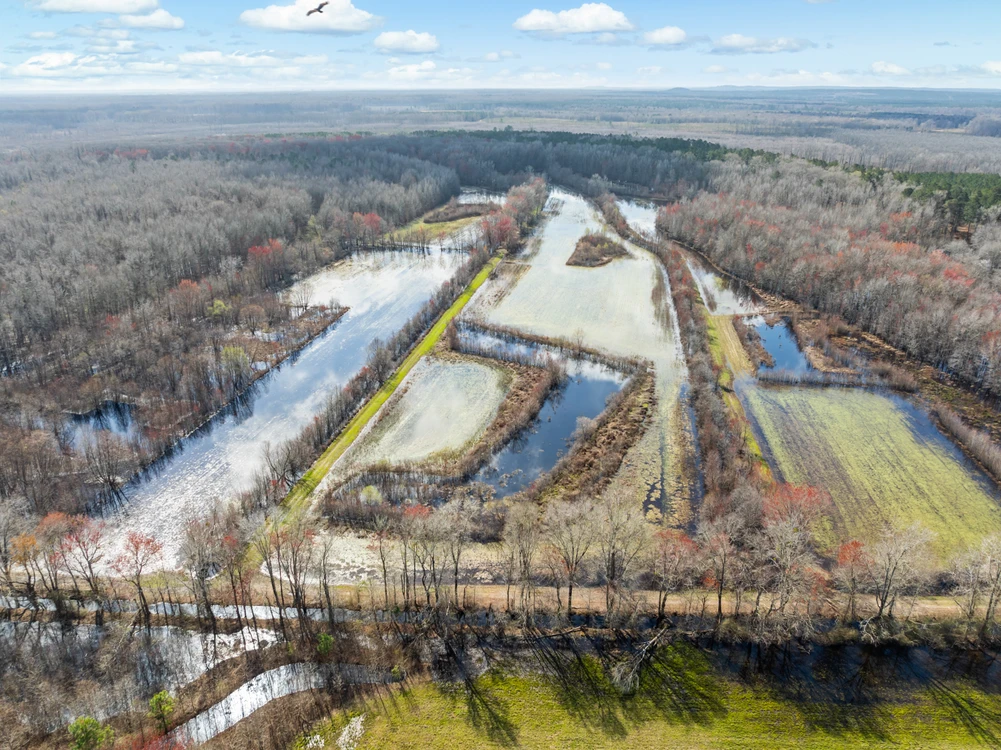
Situated along the renowned Wateree River corridor, Twin Roads represents one of the most compelling waterfowl and multi-species sporting properties in South Carolina. Spanning 906± acres in Kershaw County, the property lies within an elite neighborhood of legacy sporting lands — including the renowned Bluelands Plantation and Mulberry Plantation — that together define one of the most productive waterfowl corridors in the Palmetto State.
Water. The Way Nature Intended.
At its core, Twin Roads is defined by water. Positioned within a productive Atlantic Flyway and supported by an exceptional habitat system, the property consistently holds strong numbers of puddle ducks — including mallards and black ducks — throughout the season.
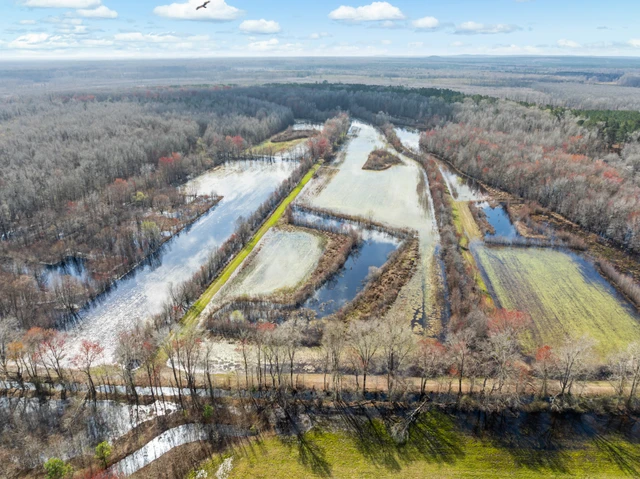
What truly separates Twin Roads from most comparable properties in the region is its rare passive gravity-fed water system. Gillie's Creek, a tributary of the Wateree River, flows directly onto the property — naturally flooding the primary impoundment, flooded hardwood timber, and connected water features at essentially zero operating cost.
The wildlife profile at Twin Roads is exceptional across every season. Waterfowl hunting ranks among the finest on the Wateree, supported by a diverse system that includes a 38± acre managed impoundment complemented by more than 100± acres of flooded hardwood timber and buckbrush. A tupelo reserve totaling approximately 25± acres further enhances the habitat, creating outstanding feeding, loafing, and roosting opportunities capable of holding multiple duck species throughout the season.
The flooded timber experience here is unlike anything most South Carolina hunters have encountered.
The diversity of species is what ultimately defines the experience here. The owners have harvested up to 11 different duck species in a single hunt — mallards, gadwall, teal, black ducks, pintails, and more.
While waterfowl hunting is the centerpiece, Twin Roads offers exceptional recreation year-round. Expansive bottomland hardwoods support world-class turkey hunting.
A mix of upland pine and uniformly distributed food plots sustains strong populations of whitetail deer. The area is capable of growing trophy-class animals, with a 152-inch buck being the largest taken by the current owners. Reduced hunting pressure on neighboring tracts in recent years has only accelerated antler development across the corridor.
Approximately 100± acres of well-stocked upland pine provide an immediate opportunity for a thinning to create high-quality habitat. With a prescribed fire program and targeted herbicide work, these uplands could be further enhanced to support a quality upland game program, including a release quail operation. The adjacent Bluelands Plantation — meticulously managed for quail, waterfowl, and deer — demonstrates the clear blueprint for what thoughtful stewardship in this corridor can achieve.
Twin Roads is further enhanced by excellent infrastructure, including a meticulously maintained internal road system with a full perimeter road, flashboard riser water control structures throughout, an existing concrete pad suitable for a shop or equipment building, and a conservation easement that permits a 2± acre cabin or lodge site at the highest point on the property.
Security is exceptional. The property sits within a private, gated community of five landowners — all known to one another, all looking out for each other's land.
Twin Roads combines privacy with excellent accessibility. The property sits just 30 minutes from Columbia, 13 minutes from Historic Camden, and approximately an hour and a half from Charlotte, North Carolina. This accessibility — combined with a rare combination of expertly designed waterfowl habitat, uncommon South Carolina flooded timber hunting, and exceptional deer and turkey hunting — makes Twin Roads an exceptional candidate for both private ownership and long-term land investment.
This is a rare opportunity to acquire a legacy-quality sporting property in one of South Carolina's most proven and tightly held waterfowl neighborhoods — a place where thoughtful management, natural water, and elite habitat converge.
Details
County: Kershaw
Zipcode: 29078
Property Type One: Timberland
Property Type Two: Hunting Land
Property Type Three: Riverfront Property
Brokerage: Jon Kohler & Associates
Brokerage Link: www.jonkohler.com

Jon Kohler
Jon Kohler & Associates
(850) 508-2999
By clicking the button, you agree to our Terms of Use and Privacy Policy.


Nearby Listings
Darlington County, SC
$1,825,000 - 532 ac.
Chesterfield County, SC

$2,626,800 - 350 ac.
Fairfield County, SC
$1,195,000 - 280 ac.
Chesterfield County, SC
$1,033,765 - 235 ac.
Fairfield County, SC

$4,200,000 - 665 ac.
Fairfield County, SC

$1,733,600 - 352 ac.
Richland County, SC

$1,690,000 - 170 ac.
Kershaw County, SC
$1,985,000 - 62 ac.
Kershaw County, SC
$162,000 - 12 ac.
Richland County, SC
$909,000 - 182 ac.